Stone pitching vs stone cladding: What’s the difference?
Stone pitching and stone cladding are both popular stonework solutions, but they are used for very different purposes. Because the names sound similar, it is easy for property owners, builders, landscapers, and project managers to mix them up when planning a job.
The simplest way to think about the difference is this: stone pitching is usually a functional stonework method used for protection, stability, and erosion control, while stone cladding is usually a decorative or architectural finish applied to a wall or surface. Both can look impressive, but they solve different problems on site.
If you are planning a retaining, drainage, landscaping, facade, or outdoor feature project in Queensland, understanding the difference can help you choose the right service from the start. Below, we break down how each option works, where it is commonly used, and what to consider before deciding which one your project needs.
What is stone pitching?
Stone pitching is a method of placing and securing stones across a surface to protect it from erosion, water movement, and soil instability. It is commonly used on embankments, drainage channels, culverts, creek banks, batters, slopes, and areas where stormwater or runoff needs to be controlled.
The stones are generally laid in a way that creates a strong, durable surface. Depending on the project, stone pitching may be installed over prepared ground, bedding material, concrete, mortar, geotextile fabric, or drainage layers. The aim is usually to create a stable protective layer that can handle exposure to water, movement, and weather.
In many projects, stone pitching is chosen because it can provide a natural-looking finish while still performing a practical civil or landscaping role. It is especially useful in Queensland conditions where heavy rain, runoff, sloped land, and erosion-prone areas can place pressure on exposed surfaces.
What is stone cladding?
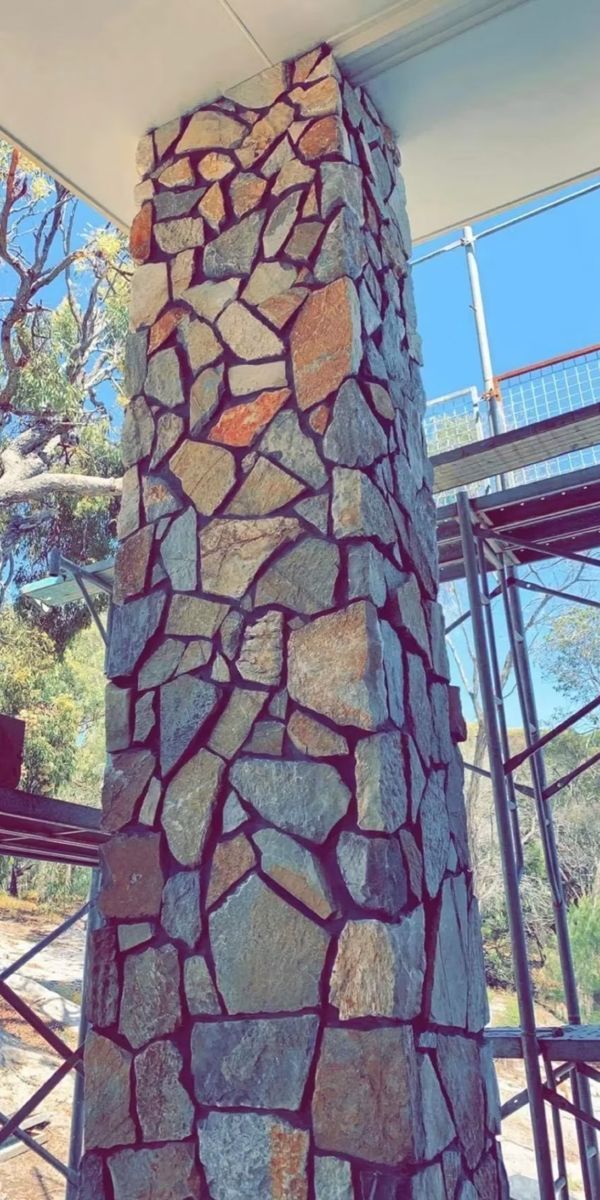
Stone cladding is a finish applied to the face of an existing wall, column, facade, retaining wall, entry feature, or outdoor structure. Rather than forming a protective surface across the ground or slope, cladding is used to improve the appearance of vertical or near-vertical surfaces.
Cladding can be made from natural stone or manufactured stone products, depending on the look, budget, and performance requirements of the project. It is often used to add texture, colour, depth, and a premium finish to areas that might otherwise look plain, such as block walls, rendered walls, exterior facades, garden walls, and front entrances.
Good stone cladding is not just about appearance. The surface must be prepared correctly, the fixing method must suit the substrate, and outdoor installations may need drainage, waterproofing, or mechanical support depending on the location and exposure. When installed properly, it can create a long-lasting feature that improves street appeal and property presentation.
The main difference: function vs finish
The biggest difference between stone pitching and stone cladding is the role each one plays. Stone pitching is usually selected because a site needs protection, stability, erosion control, or water management. Stone cladding is usually selected because a surface needs a better visual finish, more texture, or stronger architectural impact.
For example, if water is running down a slope and washing soil away, stone pitching may be the right solution. It can help protect the surface, slow erosion, and create a more durable drainage or embankment area. If a front wall looks plain and needs a high-quality natural stone finish, stone cladding is more likely to be the right choice.
That said, there can be some overlap. A stone-pitched area can still look attractive, and a stone-clad wall can still contribute to a stronger, more durable exterior. The key is understanding the main purpose of the work before choosing the method.
Where stone pitching is commonly used
Stone pitching is often used in locations where water, slope, and erosion need to be managed. This can include drainage channels, table drains, culverts, creek banks, detention basins, embankments, batters, and areas around infrastructure where soil needs protection.
It can also be used in landscaping where a rugged, natural, and durable stone surface is needed. On rural properties, acreage blocks, and civil sites, stone pitching can provide a practical solution that still blends well with the surrounding environment.
Because stone pitching often deals with water movement and ground conditions, preparation matters. The site may need excavation, compaction, bedding, drainage planning, and careful stone placement to make sure the finished surface performs properly over time.
Where stone cladding is commonly used
Stone cladding is commonly used on visible surfaces where presentation matters. Front entrances, boundary walls, columns, facades, garden walls, retaining wall faces, outdoor entertainment areas, fireplaces, and commercial frontages can all benefit from cladding.
It is a strong option when the goal is to improve street appeal, modernise a plain wall, match a landscape design, or create a more premium finish. Even a small amount of cladding in the right location can make a property feel more established and carefully designed.
Because cladding is fixed to a surface, the condition of the substrate is important. A wall may need cleaning, preparation, waterproofing, levelling, or structural assessment before stone is installed. This helps reduce the risk of movement, moisture issues, or failure later.
Which option is better for erosion control?
If erosion control is the main issue, stone pitching is usually the more suitable option. It is designed for areas where soil needs protection from water flow, weather, and surface movement. It can create a hard-wearing layer over vulnerable ground while still allowing a natural stone appearance.
Stone cladding is generally not used as an erosion control solution because it is applied to walls and built surfaces rather than directly protecting slopes, channels, or exposed ground. While it may help improve the durability of a wall face, it does not solve the same drainage or soil-loss problems as stone pitching.
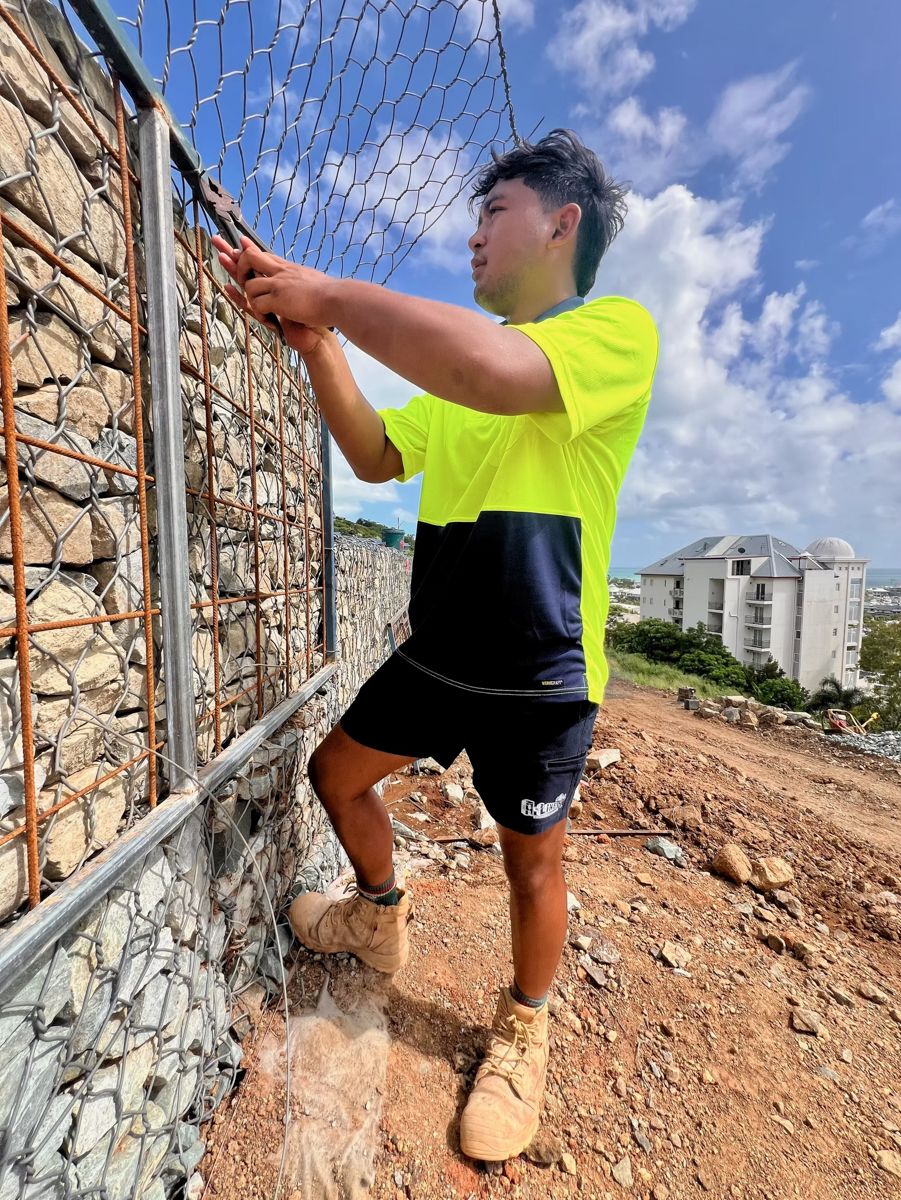
For sites with erosion issues, it is important to look beyond the surface finish. The direction of water flow, the soil type, the slope, and the expected runoff all need to be considered. In some cases, stone pitching may be combined with drainage works, gabions, or other stabilisation methods to create a complete solution.
Which option is better for street appeal?
If the main goal is to improve street appeal or create a feature finish, stone cladding is usually the better choice. It is designed to transform visible walls, entrances, facades, and outdoor structures by adding natural texture and a more refined appearance.
Stone cladding can be matched to the style of the property, from modern and architectural to rural, coastal, or traditional. It can also be used selectively, which means a feature wall or entrance detail can create a strong impression without overwhelming the whole property.
Stone pitching can also look attractive, especially in landscape and drainage areas, but it is usually selected for function first. If the surface is vertical, highly visible, and mainly needs a decorative upgrade, cladding will generally be the more appropriate option.
Can a project use both?
Yes. Many projects can benefit from both stone pitching and stone cladding, especially when the property has a mix of functional and visual requirements. For example, a driveway entrance might use stone pitching for a drainage channel and stone cladding on entry columns or boundary walls.
A landscaped front area could use stone pitching on a sloped bank or swale while using stone cladding on a retaining wall face. A commercial or civil site could use pitching for erosion control and cladding for a more professional frontage or signage area.
Using both methods can create a consistent natural stone look across the project while still giving each area the right construction approach. The important thing is to design each section for its actual purpose rather than using one method everywhere.
How to choose the right service
Start by asking what problem the project needs to solve. Is the main issue erosion, drainage, slope protection, or ground stability? If so, stone pitching may be the better fit. Is the main goal to improve the look of a wall, facade, entrance, or outdoor feature? If so, stone cladding is likely the better option.
Next, consider the site conditions. Water movement, access, soil type, wall condition, exposure, and project scale can all affect the right choice. A simple decorative wall feature will have different requirements from a drainage channel, creek bank, or high-exposure outdoor surface.
Finally, consider the long-term result you want. A well-planned stonework project should not only look good when it is finished but also perform well over time. Getting advice early can help avoid choosing the wrong method, using unsuitable materials, or missing important preparation steps.
Speak to the team at A-Line Projects about your stonework needs today
Stone pitching and stone cladding both use stone to improve a property or project, but they are not the same service. Stone pitching is generally used for functional protection, erosion control, drainage areas, slopes, and embankments. Stone cladding is generally used as a visual finish for walls, facades, columns, entrances, and outdoor features.
Choosing the right option depends on what the site needs to achieve. In some cases, the answer will clearly be one or the other. In other cases, using both can deliver the best mix of performance and presentation.
A-Line Projects works on stone pitching, stone cladding, gabions, and related stonework projects across Queensland. If you are not sure which option your project needs, get in touch with the team to discuss your site, goals, access, materials, and the most suitable approach.